After spending hours crocheting a blanket, sweater, bag, scarf, or home décor item, proper care can help keep it looking beautiful for much longer.
Crochet projects can collect dust, absorb odors, stretch out of shape, or become damaged if they are washed or stored incorrectly. The good news is that caring for handmade crochet does not have to be difficult.
In this guide, you will learn how to wash, block, and store crochet projects safely. These simple crochet care tips are useful for beginners and experienced crocheters alike.
Why Proper Crochet Care Matters
Handmade crochet projects can last for years when they are cared for correctly.
Proper care can help:
- Maintain the original shape
- Protect delicate stitches
- Reduce stretching
- Keep colors looking fresh
- Remove dust and odors
- Prevent unnecessary damage
- Make storage easier
The most important rule is simple: always check the yarn label before washing your crochet project.
Different fibers react differently to water, heat, friction, and drying.
How to Check Your Yarn Before Washing
If you still have the yarn label, look for the care symbols and instructions.
| Yarn Type | General Care |
|---|---|
| Cotton | Often machine or hand washable |
| Acrylic | Usually easy to wash |
| Wool | Usually needs gentle care |
| Alpaca | Gentle washing recommended |
| Bamboo Blend | Follow label instructions |
| Chenille | Gentle washing is often best |
These are general guidelines. The manufacturer’s instructions should always take priority.
If the project uses multiple yarn types, follow the care requirements of the most delicate fiber.
Step 1: Prepare Your Crochet Project
Before washing, inspect the project carefully.
Look for:
- Loose yarn ends
- Loose stitches
- Detached buttons
- Beads or decorations
- Stains
- Damaged areas
- Pet hair or surface dust
Secure loose ends if necessary.
If the project has removable decorations, take them off before washing whenever possible.
For blankets and large projects, gently shake them outside or use a soft lint roller to remove loose dust and hair.
How to Hand Wash Crochet Projects
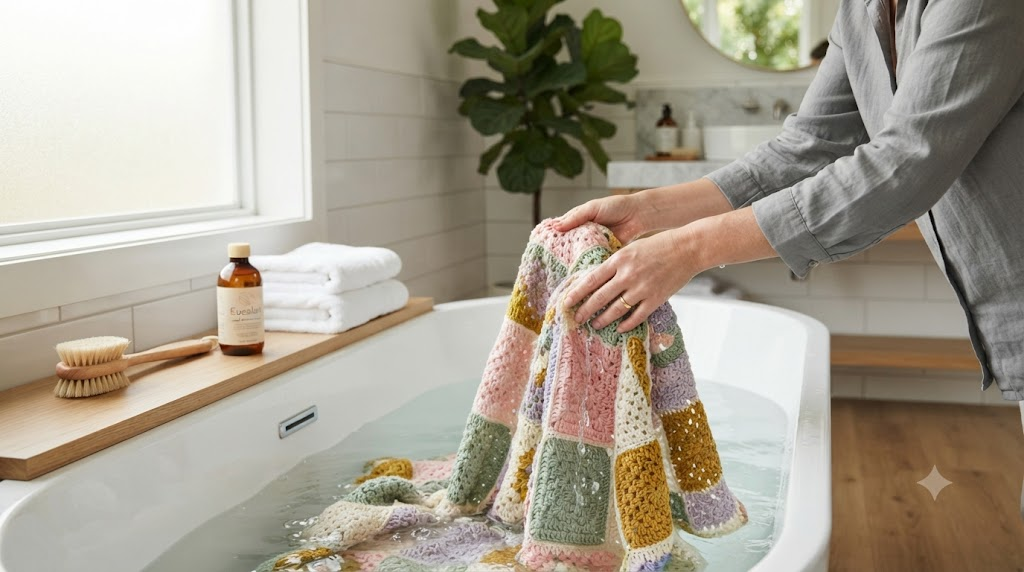
Hand washing is often the safest option for delicate crochet items.
Step 1: Fill a Basin
Fill a clean basin or sink with cool or lukewarm water.
Avoid very hot water unless the yarn manufacturer’s instructions specifically allow it.
Step 2: Add Gentle Detergent
Add a small amount of mild detergent suitable for the fiber.
Do not use too much detergent because it can be difficult to rinse completely.
Step 3: Submerge the Project
Place the crochet item gently into the water.
Allow it to become fully wet without aggressively rubbing or scrubbing it.
Step 4: Let It Soak
Allow the project to soak according to the yarn’s care instructions.
For lightly soiled items, a gentle soak may be enough.
Step 5: Rinse Carefully
Drain the water and refill the basin with clean water.
Gently rinse until most of the detergent has been removed.
Avoid twisting the project.
How to Machine Wash Crochet Projects
Some crochet projects made from washable acrylic or cotton can be machine washed.
Before using a washing machine, check the yarn label.
If machine washing is allowed:
- Use a gentle or delicate cycle.
- Use cool or lukewarm water.
- Use mild detergent.
- Place delicate items inside a mesh laundry bag.
- Avoid aggressive spin cycles when possible.
- Remove the project promptly after washing.
Avoid machine washing handmade items with delicate decorations unless the materials are specifically suitable for machine washing.
Never Twist or Wring Wet Crochet
One of the most important crochet care rules is to avoid wringing.
Wet crochet can become heavy and stretch easily.
Instead, gently press out excess water.
For a large item such as a blanket, you can place it on clean towels and roll the towels carefully to absorb moisture.
How to Dry Crochet Projects
Proper drying is just as important as washing.
Lay Flat Whenever Possible
Many crochet projects should be dried flat.
Place a clean towel on a flat surface and gently arrange the project into its natural shape.
Avoid hanging heavy wet crochet items because their weight can cause stretching.
Avoid High Heat
High temperatures can damage certain fibers or cause unwanted shrinking.
Avoid placing delicate crochet directly on a hot radiator or using high heat in a dryer unless the yarn label specifically permits it.
Keep It Out of Harsh Sunlight
Strong direct sunlight can fade some yarn colors.
Dry colorful crochet in a shaded, well-ventilated area whenever possible.
What Is Blocking in Crochet?
Blocking is a finishing technique used to improve the shape and appearance of crochet projects.
It can help:
- Straighten uneven edges
- Define stitch patterns
- Improve the shape
- Open up lace designs
- Make squares more consistent
- Create cleaner corners
Blocking does not necessarily fix every crochet problem. It is mainly a finishing technique that helps the completed project look more polished.
How to Block Crochet
The correct blocking method depends on the yarn fiber and project.
Wet Blocking
Wet blocking involves getting the project completely damp and then shaping it into the desired dimensions.
Basic steps:
- Wash or wet the crochet item.
- Gently remove excess water.
- Place it on a blocking mat or clean towel.
- Shape the item carefully.
- Pin the edges if appropriate.
- Allow it to dry completely.
- Remove the pins.
Wet blocking can work well for many natural fibers.
Spray Blocking
Spray blocking is a gentler method.
Place the dry project on a blocking surface and shape it. Lightly spray it with water, then allow it to dry in position.
This method can be useful for projects that only need a small amount of reshaping.
Steam Blocking
Steam blocking uses gentle steam to relax the fibers.
However, you should be careful because excessive heat can damage some yarns, especially synthetic fibers.
Keep the steam source at a safe distance and never press a hot iron directly onto the crochet unless the yarn manufacturer specifically says it is safe.
What You Need for Blocking
You do not need expensive equipment.
Basic supplies include:
- Blocking mats
- Rust-resistant pins
- Measuring tape
- Spray bottle
- Clean towels
For larger blankets, interlocking foam mats can provide a convenient blocking surface.
How to Store Crochet Projects
After your project is clean and completely dry, proper storage can help protect it.
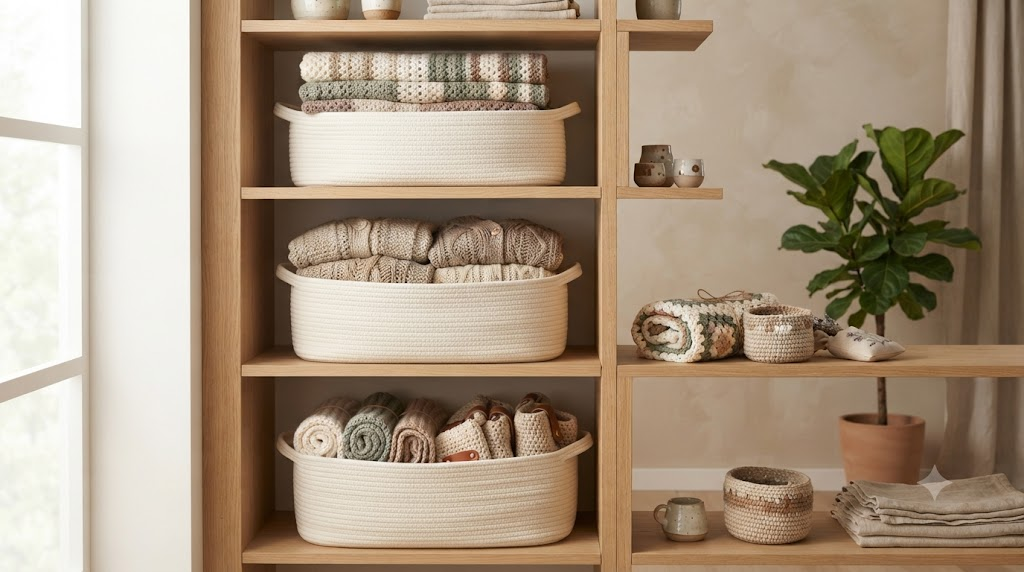
Fold, Don’t Hang Heavy Items
Heavy blankets, sweaters, and shawls can stretch when stored on hangers.
Fold them neatly instead.
Use Breathable Storage
For long-term storage, breathable fabric bags or cotton storage containers can be useful.
Avoid sealing natural-fiber crochet in a way that traps moisture.
Keep Crochet Dry
Moisture can encourage unpleasant odors and, in some conditions, mold or mildew.
Make sure your crochet items are completely dry before storing them.
Avoid Overcrowding
Do not compress too many handmade items into one small container.
Give your crochet projects enough space to maintain their shape.
Protecting Crochet From Moths and Pests
Natural fibers such as wool can attract clothes moths.
To help protect your projects:
- Keep storage areas clean.
- Wash items before long-term storage.
- Check stored items regularly.
- Use appropriate pest-control storage products according to their labels.
- Avoid storing damp clothing or blankets.
If using scented products or moth repellents, keep them appropriate for the storage environment and away from children and pets.
How Often Should You Wash Crochet?
Crochet does not necessarily need to be washed after every use.
Wash items when they become dirty, develop an odor, or require freshening.
Frequently used items such as blankets, scarves, and clothing may need more regular cleaning than decorative pieces.
Overwashing can cause unnecessary wear, so clean your crochet when needed rather than automatically washing it after every use.
Crochet Care by Project Type
| Crochet Project | Recommended Care |
|---|---|
| Blanket | Gentle wash + dry flat |
| Sweater | Follow yarn label + reshape |
| Scarf | Gentle washing |
| Baby Blanket | Wash according to yarn label |
| Amigurumi | Gentle surface or hand cleaning |
| Crochet Bag | Spot clean or gentle wash |
| Table Runner | Gentle wash + blocking |
| Granny Squares | Gentle wash + reshape |
Common Crochet Washing Mistakes
Using Hot Water
Hot water can cause certain fibers to shrink or change shape.
Scrubbing Too Hard
Aggressive rubbing can damage delicate stitches.
Wringing the Project
Twisting wet crochet can stretch the fabric.
Hanging Heavy Crochet While Wet
The weight of water can pull the project out of shape.
Using Too Much Detergent
Excess detergent can leave residue in the yarn.
Storing Before Completely Dry
Even slight moisture can cause unpleasant odors and other problems during storage.
How to Keep Crochet Projects Looking New
A little regular maintenance can make a big difference.
- Remove stains promptly.
- Follow the yarn label.
- Store projects away from excessive moisture.
- Avoid unnecessary washing.
- Repair loose stitches early.
- Refold stored items occasionally.
- Keep delicate projects away from sharp objects.
For clothing and blankets, gentle handling is usually better than frequent aggressive cleaning.
Frequently Asked Questions
Can I put crochet projects in the washing machine?
Some can. Always check the yarn label first. If machine washing is permitted, use a gentle cycle and appropriate water temperature.
Can crochet be put in the dryer?
It depends on the yarn. Some washable acrylic and cotton projects may tolerate low heat, but many handmade items are safer when dried flat.
Should I block crochet after washing?
Blocking can be useful after washing, especially if the project needs reshaping or has uneven edges.
How do I wash a crochet blanket?
Check the yarn label first. If hand washing is recommended, use cool or lukewarm water and mild detergent. Gently press out excess water and dry the blanket flat.
Can I iron crochet?
Avoid directly ironing crochet unless the yarn manufacturer specifically allows it. Heat can damage or flatten some fibers.
How do I store crochet blankets?
Wash and completely dry them first, then fold them neatly and store them in a clean, dry, breathable storage area.
How do I prevent crochet from stretching?
Avoid wringing wet crochet and do not hang heavy wet items. Drying flat and blocking the project can help maintain its shape.
How often should I block crochet?
Blocking is usually done when finishing a project or when the item needs reshaping. It does not necessarily need to be done after every wash.
Final Thoughts
Taking care of handmade crochet projects does not have to be complicated. The key is to wash gently, dry carefully, block when needed, and store projects properly.
Always start by checking the yarn label because different fibers have different care requirements. When you are unsure, gentle hand washing and flat drying are often safer choices than aggressive cleaning methods.
With proper care, your favorite crochet blankets, sweaters, bags, accessories, and home décor pieces can stay beautiful and useful for years.